

Harley Benton R-446

Harley Benton R-446
The R-446 is the sleeper hit in Harley Benton’s metal lineup. Great neck, versatile tones, and a price that leaves room in your budget for upgrades—it’s the kind of guitar that grows with you.

Guitar Details

Type of Guitar:

Solid Body

Best For:

Metal & Shred

ELECTRIKJAM Rating:

★★★★★

Pickups:

ARTEC Ceramic Humbuckers

Scale Length:

25.5"

Notable Features & Testing Notes

Out of the box, the Harley Benton R-446 needed a quick setup, but nothing major. The nut was cut correctly, all the frets were level, and thankfully there were no sharp fret ends.

That’s a good sign, especially on a budget guitar.

After a tune-up, it was ready to go. The neck binding was surprisingly clean for this price point, which already put it ahead of a lot of similarly priced guitars.

Body & Design

The R-446 clearly takes inspiration from Schecter and Ibanez designs without outright copying them.

It’s close to a Schecter C-1 in silhouette, but with a few extra curves and contours that make it its own thing. The metallic finish gives it a high-end look that’s hard to ignore.

One interesting choice is the body shaping. Instead of the usual carved top, Harley Benton went with bevels on both the front and back.

These bevels work as an armrest on the top and a tummy cut on the back, so it feels comfortable when you’re standing or sitting.

The lower horn has an intentional carve that’s all about upper fret access. You can easily reach the 24th fret without twisting your wrist into knots—a feature I usually expect on something like a Charvel.

The control layout is also smart: the knobs and switch are far enough back that you won’t accidentally hit them while palm muting.

Neck Feel

The neck is one of the main reasons we picked the R-446 as one of the best Harley Benton guitars for metal. It’s a true “Thin C” profile, something every brand claims, but few get right.

This one is slim without flattening into a D shape, and the 16″ radius makes it great for both riffing and lead work.

To me, it feels like an ESP-style neck with the flatness of an Ibanez board. It’s quick, comfortable, and would suit players with smaller hands just as well as shredders with big paws. Honestly, “effortless” is the word that keeps coming to mind.

Pickups & Electronics

The pickups here are the R-446’s secret weapon. They’re made by ARTEC, and while they look like actives thanks to their flat plastic covers, they’re actually passive ceramic humbuckers.

ARTEC has been quietly supplying pickups for dozens of brands for decades, often rebranded under different names. Chances are you’ve played an ARTEC without even realizing it.

The real surprise is the 5-way selector. Positions 1, 3, and 5 are full humbucker tones, while positions 2 and 4 split into single-coil sounds. No push-pull knob—just straight-up five unique tones from one switch.

The humbuckers have that mid-scooped EQ curve that metal players love, and the single-coil settings work beautifully for clean, ambient, or prog-metal textures.

Hardware

If the R-446 has a weak spot, it’s the hardware—mainly the tuners and nut. The tuners are basic budget fare, and the nut is plastic.

They’re functional, but if you plan to gig with this guitar, they’d be the first things to swap out. The bridge, on the other hand, is solid and doesn’t need immediate attention.

Why It Works for Metal

For $133 plus $60 shipping, it’s hard to find anything in this range that’s as playable and versatile. It’s not just a good beginner’s guitar—it’s also a great modding platform for experienced players.

Give me $100 in parts and a couple of hours, and I could turn this into a gig-ready beast:

  • Locking tuners for stability
  • A TUSQ nut for better tone and tuning
  • Maybe a pickup swap if you want a different flavor (though the stock ARTECs are perfectly solid)
  • Plugged into a BOSS Katana, the R-446 excelled at high-gain tones, and that mid-scooped voicing nails Pantera-style riffs.

Final Verdict

The Harley Benton R-446 was clearly designed to be a sleek, aggressive metal guitar that won’t destroy your budget.

While it’s not flawless out of the box, it has the kind of solid foundation that makes upgrading easy and worthwhile.

Even without mods, it’s still one of the best Harley Benton guitars for metal—especially if you’re looking for your first “serious” guitar.

The R-446 is the sleeper hit in Harley Benton’s metal lineup. Great neck, versatile tones, and a price that leaves room in your budget for upgrades—it’s the kind of guitar that grows with you.

Just don’t wait too long; the cool color options sell out fast, though the Charcoal Black/Graphite model is usually in stock.
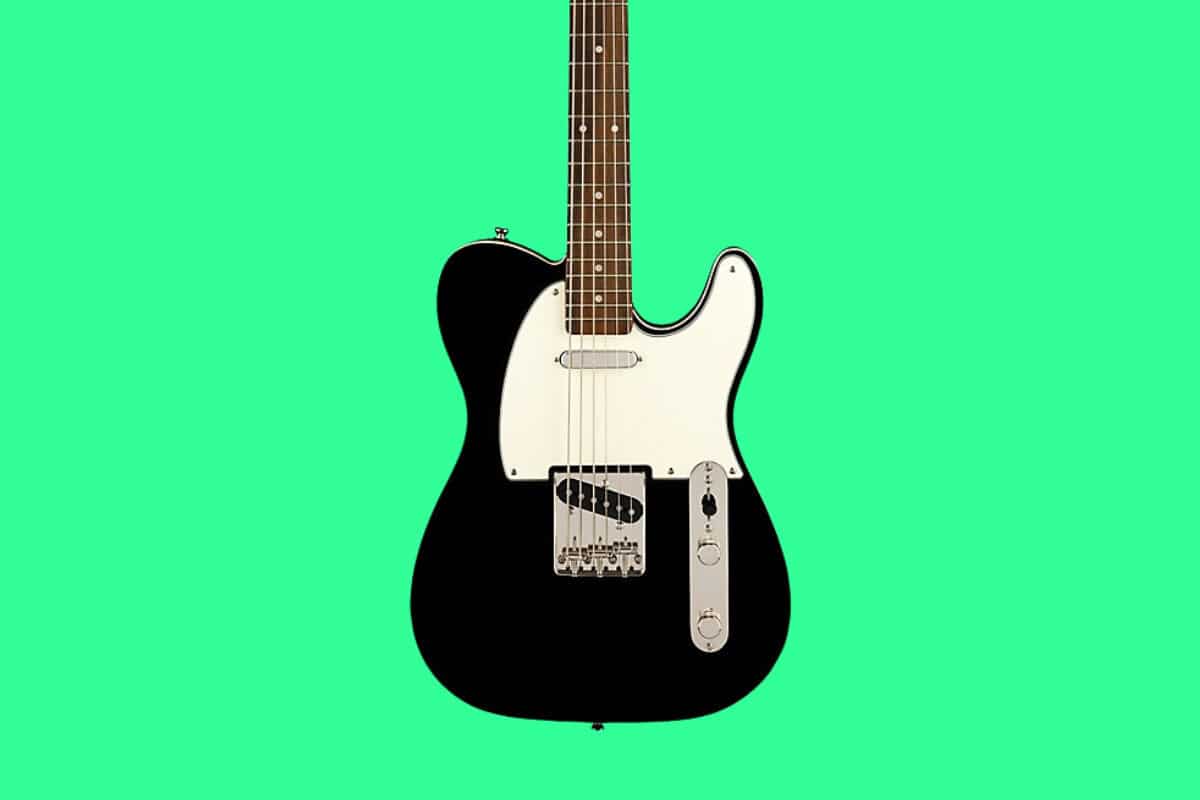


  • Squier Classic Vibe Baritone Custom Telecaster

    Squier Classic Vibe Baritone Custom Telecaster

    The 27″ scale length is the sweet spot here. It keeps your B–B or A–A tunings tight and piano-like. In Dark Country, you often rely on those low, brooding “booms” and droney pedal tones. On shorter scale guitars, these notes can get “flubby,” but the Cabronita keeps them percussive and clear. The string-through-body hardtail bridge adds a level of tension and sustain that is vital for those long, ominous notes that need to hang in the mix like a thick fog.


  • Fender American Ultra II Stratocaster HSS

    Fender American Ultra II Stratocaster HSS
    The American Ultra II HSS is about as far from “just another Strat” as you can get. The new stainless steel frets make bending effortless and will likely last decades. The compound radius fretboard feels fast without being clinical, while the Modern “D” neck with rolled edges is smooth and broken-in from day one.
  • Harley Benton R-446

    Harley Benton R-446
    Overall, for $133 plus $60 shipping, you will be hard pressed to find a guitar that competes with the Harley Benton R-446. This is a great beginner guitar, but as I also say about the lower priced Harley Benton guitars: The R-446 is a great mod platform for experienced guitarists. If you gave me $100 and a couple of hours, I could mod this guitar to be BEAST.
  • Harley Benton Fusion-T HT EMG

    Harley Benton Fusion-T HT EMG
    Honestly? This guitar plays like a mid-tier Schecter, something like the Sun Valley Super Shredder, but at less than half the price. And I’m not just talking about the specs; I mean the actual feel. If you covered up the headstock and handed it to me blindfolded, I’d swear it was a $1,000+ guitar from Schecter or Charvel.
  • Harley Benton SC Custom VBK

    Harley Benton SC Custom VBK
    Overall, the Harley Benton SC Custom is an absolute monster of a guitar. It has just about every upgrade you could want, and it even comes with a gig bag for $369! This is a lot of guitar for the money, and I would totally gig this guitar. The SC Custom is one of the best Harley Benton guitars for Metal, Rock, or just about any genre!
  • Manson Meta Series Matt Bellamy MBM-2H

    Manson Meta Series Matt Bellamy MBM-2H
    The MBM-2H stands out as one of the most creative and player-focused guitars in its price range. From the stutter-ready kill button to the sleek compound radius neck and rock-solid locking tuners, it’s clearly designed for musicians who want more than just another entry-level instrument. While it doesn’t have every premium detail of Matt Bellamy’s custom builds, it captures the spirit and functionality in a package that’s actually affordable.
  • Jackson JS22 Dinky

    Jackson JS22 Dinky
    I didn’t even have to crank the amp, this thing came alive as soon as I hit a power chord. The neck feels almost unfairly fast for this price point, and once I got used to the 12″-16″ compound radius, runs and legato felt effortless. You’re not getting boutique appointments here, but what you do get is a focused, aggressive guitar that begs for distortion pedals and tight palm mutes.
  • Squier Sonic Stratocaster HSS Maple Fingerboard

    Squier Sonic Stratocaster HSS Maple Fingerboard
    This guitar doesn’t try to reinvent the Strat wheel, and that’s a good thing. It sticks to the fundamentals and executes them well. The HSS pickup combo makes it more flexible than your average beginner Strat, and the neck? Super smooth. I played some blues licks, pop chord progressions and some speedier metal riffs back-to-back and didn’t feel like I was out of bounds tone-wise. Sure, it’s basic but it plays better than it should at this price. Pretty typical of what you get with Squier’s these days. They’re damn impressive.
  • Fender Standard Telecaster

    Fender Standard Telecaster
    This is the Telecaster to grab if you want that signature tone without spending Custom Shop money. It’s got all the essentials—bright bridge snap, mellow neck warmth, and a neck that feels good for hours of play. Are the ceramic pickups a little hotter than vintage types? Sure. But they cut through a mix like a hot knife through butter. And that gloss body with a maple board? Just looks right.
  • Fender Jack White Triplecaster Telecaster 

    Fender Jack White Triplecaster Telecaster 
    This isn’t just a “signature model.” It’s an idea machine. The pickup mix is totally unique, the stutter switch is addictive, and the “Direct-To-Jack” mode turns this thing into a sonic sledgehammer. The soft V neck is surprisingly comfortable, and the maple board feels slick. I don’t always get hyped about signature guitars, but this one’s different: it’s not built to copy Jack White’s tone, it’s built to encourage you to make your own.