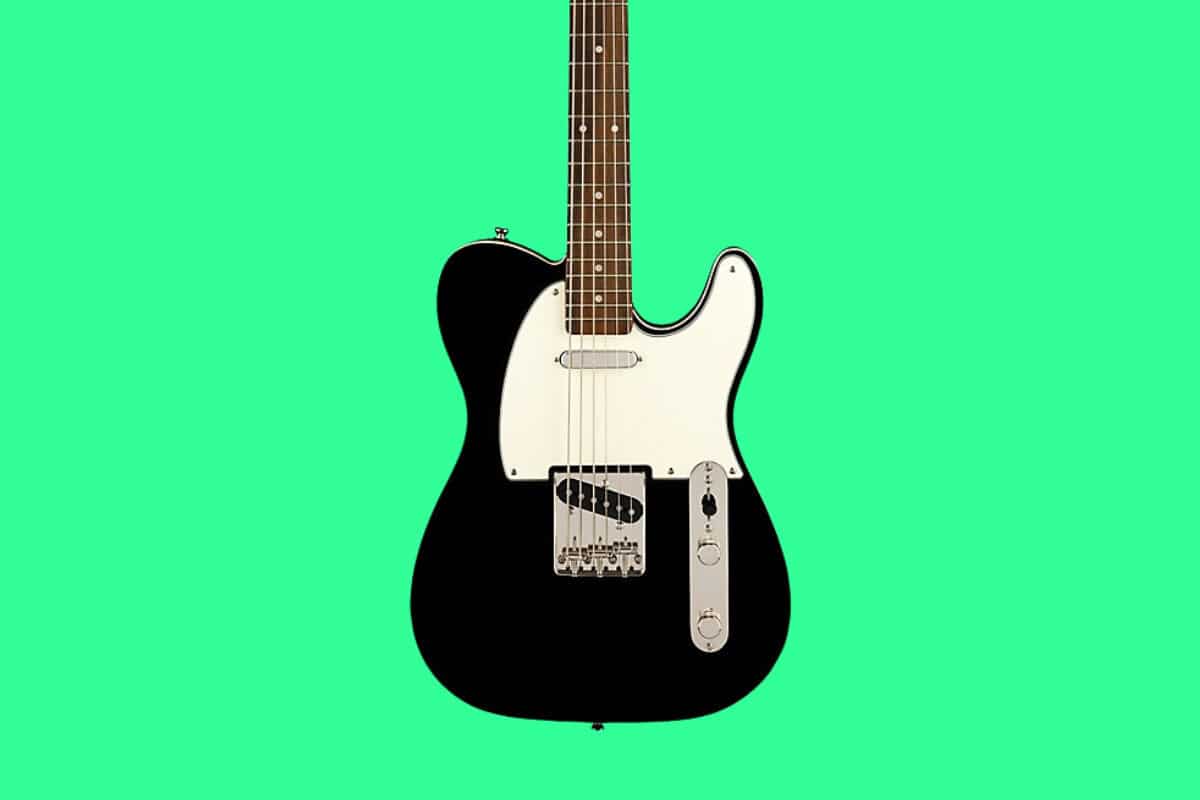
Fender Standard Telecaster

Guitar Details
Type of Guitar:
Solid-Body
Best For:
Country, blues, rock, indie, pop
ELECTRIKJAM Rating:
★★★★★
Pickups:
Fender Standard ceramic single-coil
Scale Length:
25.5"
Editor’s Thoughts

Chris Horton
ELECTRIKJAM, Founder

Author
Date
ELECTRIKJAM Recommended Gear
✅ Best Electric Guitars To Buy Right Now
✅ Best Budget Guitar Multi-Effects Pedals (Under $500)
✅ Best Ibanez Guitars: Premium, Mid-Range & Beginner
✅ Best Digital Mixers & Stageboxes [Affordable To High-End]
✅ Best Studio Speakers For Beginners on A Budget (That Don’t Suck)
Connect
Notable Features & Testing Notes
Pros
Modern “C” Neck Is All-Day Comfortable
This profile is perfect for both chords and leads, with a satin back that lets your hand glide. If you’ve got average-sized hands or bigger, it’ll feel just right.
Punchy Ceramic Pickups
These aren’t shy. The bridge pickup has that iconic Tele snap—bright, aggressive, and present. The neck is round and smooth, great for comping or jazzy leads. If you like your tone bold, you’ll dig these.
Solid Build, Reliable Hardware
The poplar body keeps things light and resonant. The bridge is simple and effective, and the sealed tuners do a solid job (though some users suggest upgrading if you’re a tuning stickler).
Looks Like a Proper Tele
Between the black pickguard, maple board, and color options like Butterscotch Blonde and 3-Tone Sunburst, this is an eye-catching guitar that still keeps things classic.
Great Modding Platform
Whether you want to swap in Alnico pickups, upgrade tuners, or go full Esquire-style, this guitar makes a great starting point. It’s built simply, which means modding is easy.
Any Caveats?
Tuners Can Slip With Heavy Use
For casual playing, they’re fine. But if you’re gigging or tuning a lot on the fly, consider a tuner upgrade.
Ceramic Pickups Are Hot and Bright
Great for cutting through the mix, but they can sound harsh to some ears—especially with bright amps. If you prefer warmer, vintage-style tones, you might want to swap them out.
Nickel Frets Will Wear Over Time
Not a dealbreaker, but if you play hard and often, expect to see some fret wear after a few years.
Why You Should Be Looking at This Guitar
Whether you’re building your first rig or adding a trusty Tele to the mix, this model is one of the safest bets out there:
- Affordable entry into Fender tone and feel
- Classic design with modern comfort
- Versatile enough for any genre
- Simple, mod-friendly platform for upgrades
- Ready for gigs, studio, or couch jams out of the box
Wrapping Up…
The Fender Standard Telecaster (Maple Fingerboard) proves you don’t need to spend big to get classic tone, comfort, and a timeless look. It’s a true workhorse that performs way above its price tag. While it’s not loaded with boutique specs, it feels like a real Fender because it is—and it sounds like one, too. For players who want that legendary Tele vibe without breaking the bank, this one’s a no-brainer.
Best New Guitar Releases
-
Squier Classic Vibe Baritone Custom Telecaster

The 27″ scale length is the sweet spot here. It keeps your B–B or A–A tunings tight and piano-like. In Dark Country, you often rely on those low, brooding “booms” and droney pedal tones. On shorter scale guitars, these notes can get “flubby,” but the Cabronita keeps them percussive and clear. The string-through-body hardtail bridge adds a level of tension and sustain that is vital for those long, ominous notes that need to hang in the mix like a thick fog.
-
Fender American Ultra II Stratocaster HSS
The American Ultra II HSS is about as far from “just another Strat” as you can get. The new stainless steel frets make bending effortless and will likely last decades. The compound radius fretboard feels fast without being clinical, while the Modern “D” neck with rolled edges is smooth and broken-in from day one. -
Harley Benton R-446
Overall, for $133 plus $60 shipping, you will be hard pressed to find a guitar that competes with the Harley Benton R-446. This is a great beginner guitar, but as I also say about the lower priced Harley Benton guitars: The R-446 is a great mod platform for experienced guitarists. If you gave me $100 and a couple of hours, I could mod this guitar to be BEAST. -
Harley Benton Fusion-T HT EMG
Honestly? This guitar plays like a mid-tier Schecter, something like the Sun Valley Super Shredder, but at less than half the price. And I’m not just talking about the specs; I mean the actual feel. If you covered up the headstock and handed it to me blindfolded, I’d swear it was a $1,000+ guitar from Schecter or Charvel. -
Harley Benton SC Custom VBK
Overall, the Harley Benton SC Custom is an absolute monster of a guitar. It has just about every upgrade you could want, and it even comes with a gig bag for $369! This is a lot of guitar for the money, and I would totally gig this guitar. The SC Custom is one of the best Harley Benton guitars for Metal, Rock, or just about any genre! -
Manson Meta Series Matt Bellamy MBM-2H
The MBM-2H stands out as one of the most creative and player-focused guitars in its price range. From the stutter-ready kill button to the sleek compound radius neck and rock-solid locking tuners, it’s clearly designed for musicians who want more than just another entry-level instrument. While it doesn’t have every premium detail of Matt Bellamy’s custom builds, it captures the spirit and functionality in a package that’s actually affordable. -
Jackson JS22 Dinky
I didn’t even have to crank the amp, this thing came alive as soon as I hit a power chord. The neck feels almost unfairly fast for this price point, and once I got used to the 12″-16″ compound radius, runs and legato felt effortless. You’re not getting boutique appointments here, but what you do get is a focused, aggressive guitar that begs for distortion pedals and tight palm mutes. -
Squier Sonic Stratocaster HSS Maple Fingerboard
This guitar doesn’t try to reinvent the Strat wheel, and that’s a good thing. It sticks to the fundamentals and executes them well. The HSS pickup combo makes it more flexible than your average beginner Strat, and the neck? Super smooth. I played some blues licks, pop chord progressions and some speedier metal riffs back-to-back and didn’t feel like I was out of bounds tone-wise. Sure, it’s basic but it plays better than it should at this price. Pretty typical of what you get with Squier’s these days. They’re damn impressive. -
Fender Standard Telecaster
This is the Telecaster to grab if you want that signature tone without spending Custom Shop money. It’s got all the essentials—bright bridge snap, mellow neck warmth, and a neck that feels good for hours of play. Are the ceramic pickups a little hotter than vintage types? Sure. But they cut through a mix like a hot knife through butter. And that gloss body with a maple board? Just looks right. -
Fender Jack White Triplecaster Telecaster
This isn’t just a “signature model.” It’s an idea machine. The pickup mix is totally unique, the stutter switch is addictive, and the “Direct-To-Jack” mode turns this thing into a sonic sledgehammer. The soft V neck is surprisingly comfortable, and the maple board feels slick. I don’t always get hyped about signature guitars, but this one’s different: it’s not built to copy Jack White’s tone, it’s built to encourage you to make your own.