


- Is The Gibson SG Standard ’61 Worth It For Metal Guitarists?
- ElectrikJam Summary: The Verdict
- Product Overview: Slim Taper, Maximum Attack
- Why We Prefer the SG Over the Les Paul (Live & Studio)
- Build Quality & Design: Mahogany, Nitro, and Speed
- Core Specs & Hardware: The Slim-Fast Special
- Pickup Variants Breakdown: Alnico V and Pure Aggression
- Tone & Sound Character: The Devil’s Growl
- Playability & Feel: The Stage Performer’s Dream
- Recording & Live Performance: Studio Secret Weapon
- Wrapping Up…
Is The Gibson SG Standard ’61 Worth It For Metal Guitarists?
ElectrikJam Summary: The Verdict
The Gibson SG Standard ’61 is one of the best rock machines Gibson builds today. Yeah, it’s a re-issue. But unlike most reissues, this one freakin’ slaps in the best way possible.
It delivers the iconic tone of Tony Iommi and Angus Young in a package that feels incredibly light and lightning-quick in your hands. Thom Yorke also likes an SG and so does Deftones’ Chino Moreno.
If you prioritize speed, low weight, and a sharp, focused humbucker tone, and are willing to manage the minor issue of neck dive, the SG ’61 is a thrilling, indispensable piece of rock history.
Guitarist Reviews Summary: What the Players Say
*Consensus based on 20+ independent review sources and critical perspectives from around the web
What players like
- The light weight and fantastic balance (when seated) are universally praised.
- The Slim Taper neck is fast and makes bending feel effortless.
- The ’60s Burstbuckers are singled out for their perfect classic rock aggression and clarity.
- The build quality and finish are consistent and highly rated.
What players complain about
- The neck dive when standing is the single most common complaint.
- The Vintage Deluxe tuners are sometimes seen as less precise than modern Grovers.
- Some players find the lower string tension (due to the scale length/body size) takes getting used to.
Overall tone from player feedback
The general mood is one of dedicated adoration, with players viewing the SG ’61 as the definitive, authentic, and fastest-playing SG currently available, a lightweight powerhouse built for pure stage rock.
Product Overview: Slim Taper, Maximum Attack
You want authentic Gibson tone without crushing your spine? You grab the SG Standard ’61.
This guitar is the definitive, USA-made rock machine that defines speed and aggression.
It got the classic small pickguard and the legendary Slim Taper neck. This axe is built for the player who craves featherweight comfort and lightning-fast upper-fret access without sacrificing humbucker punch.
The ’61 sits firmly in the high-end bracket, targeting the serious professional. It excels in hard rock, punk, and crunch-heavy blues, delivering a sharper, more vibrant midrange that slices through any mix.
If your stage presence demands mobility, the SG ’61 is the answer.
Why We Prefer the SG Over the Les Paul (Live & Studio)
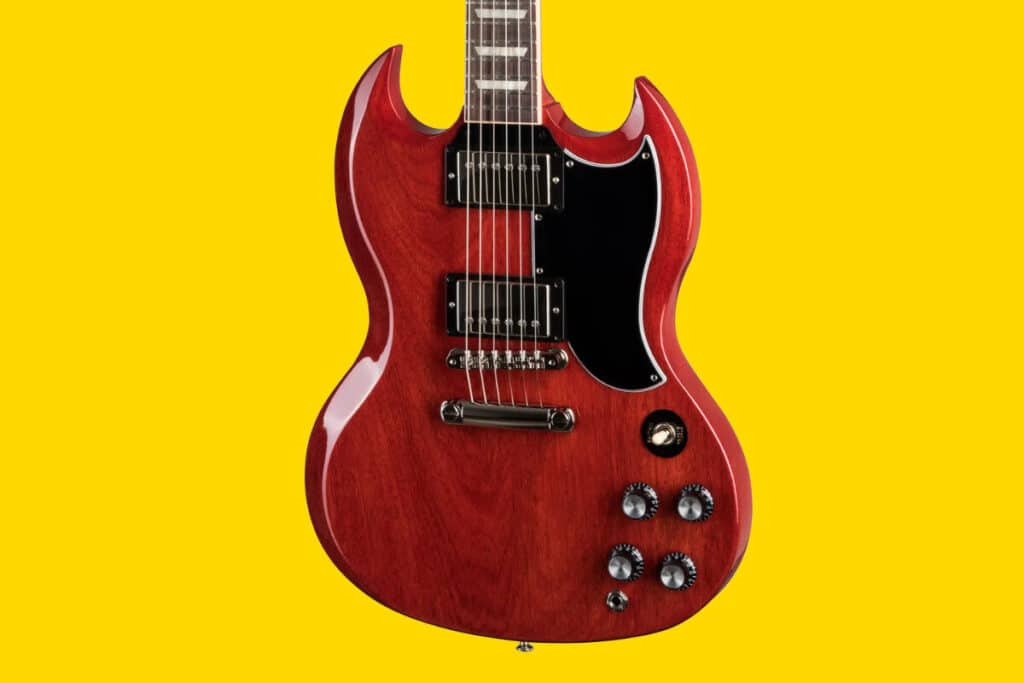
We choose the SG over the Les Paul for professional work for two non-negotiable reasons: comfort and clarity.
The SG’s lightweight, thin Mahogany construction is a massive advantage; we endure three-hour gigs without the back strain the heavy Les Paul demands.
This lightness lets you move freely on stage. In the studio, the SG’s focused midrange tone cuts through the mix instantly, often requiring less EQ than the Les Paul’s denser low-end.
We use the SG constantly for recording demos because its articulate bark leaves essential low-end space for the bass guitar, guaranteeing a clutter-free mix.
Build Quality & Design: Mahogany, Nitro, and Speed
Gibson builds this guitar with a solid Mahogany body, featuring deep scarfing for a comfortable feel.
Crucially, the SG is thin and lightweight, often clocking in under 7lbs. Gibson applies the gloss nitrocellulose lacquer by hand, guaranteeing superior resonance.
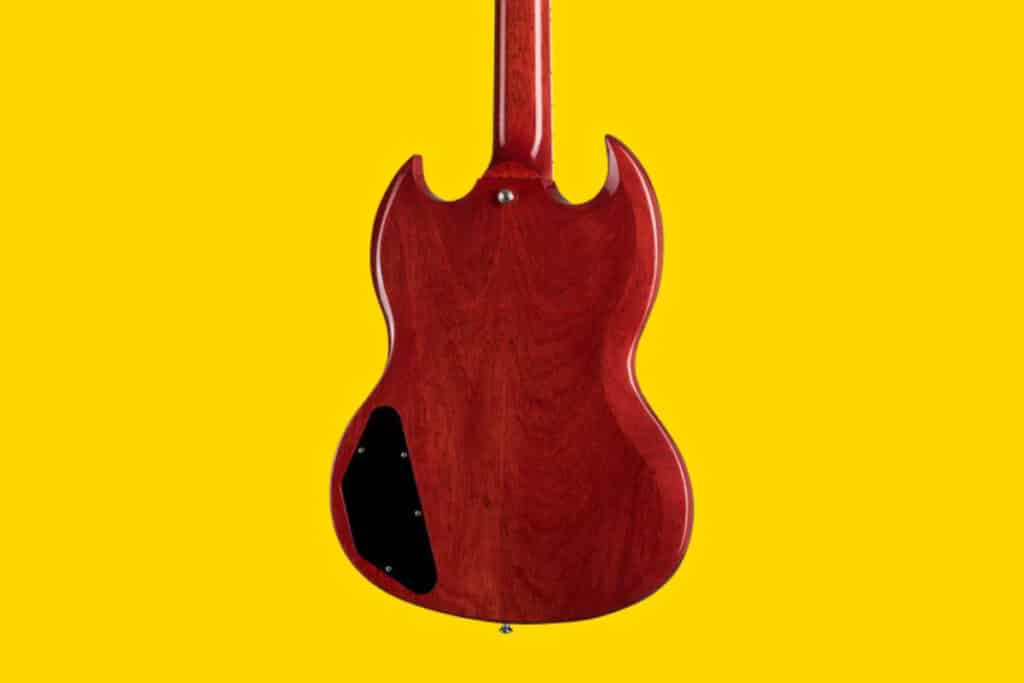
The neck is Mahogany, boasting the bound Rosewood board. It comes with with the vintage-style ABR-1 Tune-O-Matic bridge and Vintage Deluxe tuners with Keystone buttons.
The thin body design opens up unbeatable upper fret access, but you cannot escape the classic SG neck dive. To get around it, I’d recommend a grippy suede strap for stability.
Core Specs & Hardware: The Slim-Fast Special
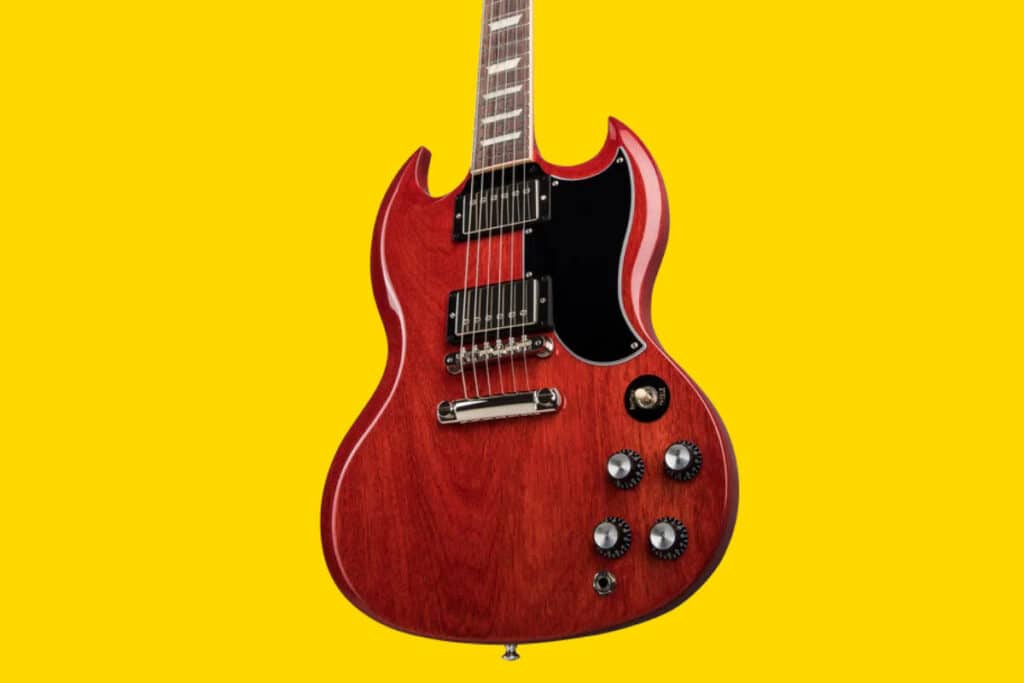
Gibson specs the ’61 for speed and focused, hot tone, dominating the standard SG in value and performance.
| Feature | The Key Detail | ElectrikJam’s Take: Why It Matters |
| Pickups | Dual ’60s Burstbucker (61R/61T) – Alnico V | Hot, articulate, and bright. We get a sharper, more aggressive tone than the warmer, boomier ’57 Classics. |
| Body Wood | Solid, thin Mahogany | Incredibly lightweight. This is the professional’s choice for touring and long sessions. |
| Neck Profile | Slim Taper | The fastest neck Gibson offers. Demanded by lead players for complex runs and speed. |
| Electronics | Hand-wired w/ Orange Drop Capacitors | Highly musical tone controls. Roll the volume down; the guitar cleans right up, guaranteed. |
| Case | Included Gibson Hardshell Case | Essential protection. We trust this case on every flight and gig. |
Pickup Variants Breakdown: Alnico V and Pure Aggression
The ’60s Burstbuckers are designed to do two things: to sound aggressive and clear.
- ’60s Burstbuckers (Alnico V): These pickups are hotter than classic PAFs. The Alnico V magnets deliver a crucial edge in top-end clarity and punchy attack. They are un-potted, meaning they deliver that organic, raw “singing” feedback at high volumes that purists demand.
- SG Standard vs. SG ’61 Pickups: We consistently choose the ’61’s 60s Burstbuckers over the standard 490R/490T because they deliver more sparkle and a clearer bite. For raw, classic rock tone, the ’61 wins hands down.
- Verdict: These pickups are dynamic. Roll back the volume for a crystalline clean, or crank it up for the aggressive, raw tone that built the SG legend.
Tone & Sound Character: The Devil’s Growl
The SG ’61 delivers a tight, aggressive midrange bark and fantastic articulation—a unique tone we prefer over the Les Paul’s lower frequency density.
- Clean: Surprisingly clear and chimey in the neck position. The thin body adds a distinct, airy quality a Les Paul cannot match.
- Crunch: This is the SG’s home turf. It delivers a sharp, focused, percussive crunch perfect for rock riffs. The sustain is exceptional.
- High Gain: We throw massive distortion at it, and it handles it effortlessly. The Alnico V Burstbuckers keep the signal articulate and tight in the low end. It cuts through the mix with a vengeance.
Playability & Feel: The Stage Performer’s Dream
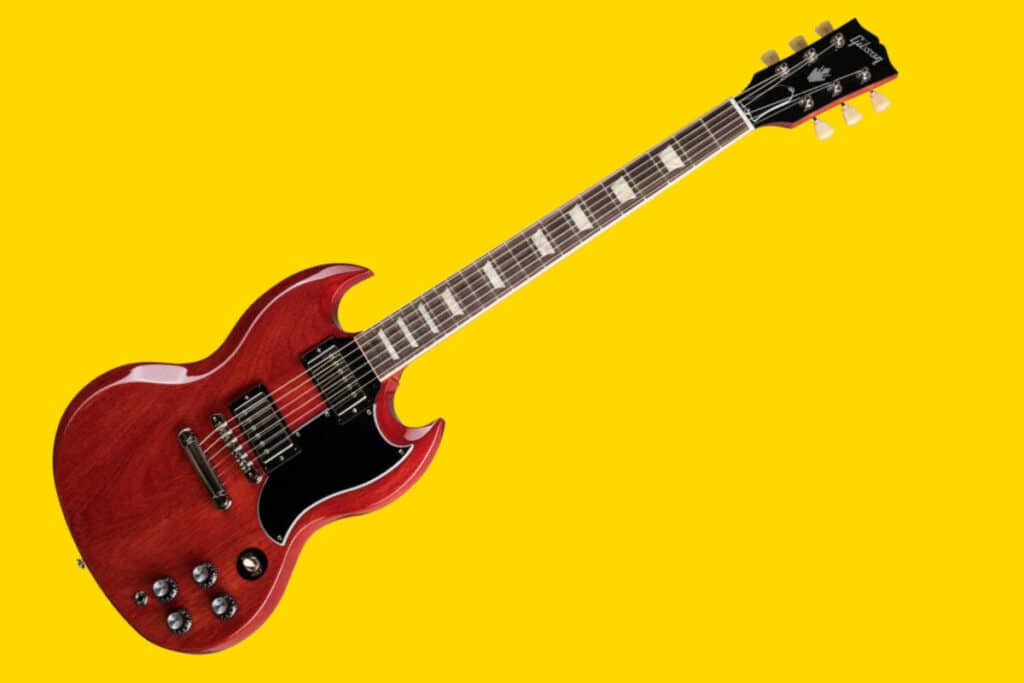
The Slim Taper neck is the main reason we keep grabbing this guitar; it is superb for complex work and rapid runs.
The deep double cutaways guarantee unimpeded access to all 22 frets.
The low weight is a godsend for any player. While it suffers from neck dive, a simple strap fixes it. You gain the ability to move freely on stage, a non-negotiable professional requirement, and the SG delivers this over the Les Paul 60s which is damn heavy.
Recording & Live Performance: Studio Secret Weapon
I’ve used this guitar for touring and in the studio; it’s great at both. It’s reliable, it holds its tune brilliantly, and its so lightweight you can play it all day with little to no issues.
Here’s why we recommend this guitar to anyone that wants or likes to play metal, rock, country, or blues.
- Live: Its light weight and fast neck make it the ideal stage instrument for high-energy performance. We rely on the hand-wired circuit to be quiet and reliable.
- Recording: We use the SG for tracking rhythm parts because its focused, punchy midrange instantly finds its space in the mix, leaving crucial low-end space for the bass guitar. We track multiple layers quickly thanks to the comfortable Slim Taper neck.
Wrapping Up…
Pros
- Unrivaled Playability: Featherweight body and fastest neck (Slim Taper) in the standard lineup.
- Aggressive, Articulate Tone: ’60s Burstbuckers provide punch and clarity for rock.
- Unbeatable Access: Deep double-cutaway design makes the 22nd fret easily reachable.
- Superior Value Package: Hand-wired electronics, nitro finish, and hard case included.
Cons
- The Dreaded Neck Dive: We must use a non-slip strap to hold a stable playing position.
- Neck Joint Stability: The thin heel remains a historical concern (though modern versions improve this).
- Price: It demands a significant investment, firmly in the professional price range.
