


Is The Gibson Les Paul Standard ’60s Worth It For Metal Players?
ElectrikJam Summary: The Verdict
The Gibson Les Paul Standard ’60s is pure Gibson, distilled and refined. It perfectly executes the “Slim Taper” formula, delivering massive tone, creamy sustain, and a lightning-fast neck that the ’60s are known for.
It’s an expensive investment, but one that is absolutely justified by the playability and the undeniable heroic rock tone it delivers. If you want a USA-made Les Paul that’s built for speed and power, this is your axe.
Guitarist Reviews Summary: What the Players Say
*Consensus based on 20+ independent review sources and critical perspectives from around the web
What players like
- The Slim Taper neck is universally praised for being comfortable and fast.
- The Burstbucker 61s are lauded for their cutting, articulate tone compared to the warmer ’50s model.
- The build quality is seen as a strong return to form for Gibson.
What players complain about
- The heavy weight of the non-weight-relieved body is the most frequent complaint.
- The high price tag remains a barrier for many.
- Some minor issues with nut cutting or binding bleed (though less frequent than in the past).
Overall tone from player feedback
The general mood is one of relief and satisfaction. Players feel Gibson successfully delivered an authentic, gig-worthy, and inspiring Les Paul built to true vintage specifications.
Product Overview: Slim Taper, Hot Tone
The Gibson Les Paul Standard ’60s is a tribute to Gibson’s “Golden Era”, specifically capturing the thinner neck profile and hotter tones that defined the early 1960s.
Its core identity is that of a premium, no-compromise rock instrument that delivers authentic vintage vibe with modern Gibson reliability.
It is aimed at the professional guitarist, serious enthusiast, or collector who demands USA-made quality and classic specifications, positioning it firmly in the high-end bracket (just below Custom Shop prices).
It is best for Classic Rock, Blues-Rock, Hard Rock, and anything requiring rich sustain and vocal lead tones.
It’s an essential tool for studio recording and prestigious gigging, offering the classic weight and feel that define the Les Paul experience.
The primary difference from its ’50s sibling is the neck carve and the Alnico V pickups, making it the choice for players who prioritize speed and a sharper attack.
Build Quality & Design: Heritage and Heft
This is a premium, American-made instrument. The body is solid, non-weight-relieved Mahogany—meaning this is a heavy guitar—capped with a beautifully figured AA Maple top.
The neck is also solid Mahogany, set with a long tenon joint for maximum resonance. Crucially, the finish is a nitrocellulose lacquer, which is thin, allows the wood to breathe, and ages beautifully.
The craftsmanship is excellent, marking a clear return to form for Gibson’s quality control. Fretwork on the 22 Medium Jumbo frets is generally spot on, and the Rosewood fretboard features traditional Trapezoid inlays and cream binding.
The hardware, including the Grover Rotomatic tuners, feels robust and professional. This guitar is built with authentic, traditional materials, giving it the legendary sustain Les Pauls are known for.
Core Specs & Hardware: The Slim & Sharp Details
The specs are pure 1960s-inspired vintage power, built in Nashville, Tennessee.
| Specification | Detail | ElectrikJam’s Take: Why It Matters |
| Pickups | Burstbucker 61R (Neck) / 61T (Bridge) – Alnico V | Hotter and more aggressive than the ’50s PAFs. Provides great cut and bite for rock leads. |
| Body Wood | Solid Mahogany w/ AA Figured Maple Cap | No weight relief. Maxes out sustain but demands a solid strap. The AA top adds visual appeal. |
| Neck Profile | Slim Taper | Faster and less chunky than the ’50s profile. Ideal for lead players who like to move fast. |
| Scale Length | 24.75″ (628mm) | The classic Gibson scale, providing that lower string tension for easy bending and massive, singing vibrato. |
| Bridge Type | ABR-1 Tune-O-Matic with Aluminum Stopbar | Authentic vintage hardware choice. The ABR-1 sits directly into the body for improved transfer and resonance. |
| Electronics | Hand-wired w/ Orange Drop Capacitors | The caps ensure the tone control actually sounds musical and usable when rolled back. Pure tone, no gimmicks. |
| Tuning Hardware | Grover Rotomatic Tuners | A common ’60s modification now stock. Excellent precision and rock-solid stability. |
Pickup Variants Breakdown: Alnico V Attack
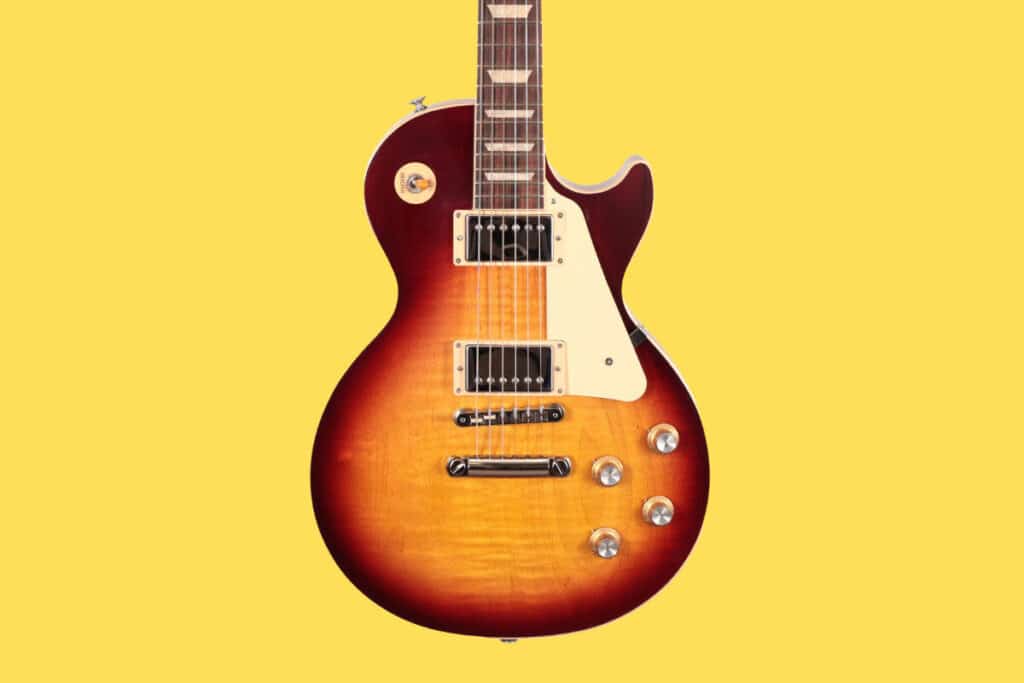
The ’60s Standard is defined by its Burstbucker 61 pickups loaded with Alnico V magnets.
This is the key difference from the ’50s Standard, which uses Alnico II.
- Burstbucker 61R/61T (Alnico V): These are essentially slightly overwound, hotter PAF-style pickups. The Alnico V magnets deliver a sharper attack, tighter low-end response, and slightly more output than Alnico II. This makes the guitar more responsive to pick dynamics and gives it better articulation under higher gain.
- Tone/Genre Fit: Perfect for those seeking the tones of Slash, Jimmy Page, or Gary Moore—creamy, singing leads and huge, thick rock rhythm.
- Noise Behavior: As traditional humbuckers, they are hum-cancelling. However, being un-potted like the originals, they can be susceptible to microphonic feedback at extreme volume or high-gain settings, which many players consider a desirable, organic tonal characteristic (the “singing” feedback).
- Recommendation: If you prioritize speed, articulation, and a hotter output over the “rounded” thump of the ’50s model, the ’60s is your clear choice.
Tone & Sound Character: Vicious and Vocal
The tone is the reason you pay the Gibson price—it’s complex, responsive, and huge.
- Clean: The cleans are warm and full, with a pronounced bell-like chime thanks to the maple top. The neck pickup is lush, perfect for smooth jazz or soulful blues.
- Crunch: This is pure Classic Rock gold. The Burstbucker 61s push the amp harder, creating a rich, harmonic-laden crunch. The lack of weight relief ensures immense sustain and a complex resonance that vibrates through the entire instrument.
- High Gain: It handles high gain effortlessly, delivering a tight, thick roar that never loses note definition. The Alnico V magnets provide the necessary aggression and bite to cut through a dense band mix without becoming wooly.
- Dynamics: The hand-wired electronics with Orange Drop capacitors mean the volume and tone knobs are highly usable, allowing you to clean up the sound simply by rolling back the volume pot—a key feature for expressive playing.
Playability & Feel: The Speed Les Paul

The ’60s Standard is defined by its Slim Taper neck profile. While still substantial by non-Gibson standards, it is significantly thinner than the ’50s “baseball bat,” making it exceptionally fast for lead work, shredding, and players with smaller hands.
The traditional 12″ radius allows for low action without fretting out on big bends. The only drawback is the classic Les Paul weight, which can be challenging for long sets; a wide, comfortable strap is mandatory.
Recording & Live Performance: No Compromises
This guitar is a premier studio and stage instrument.
- In a Mix: The Les Paul sound is instantly recognizable and always sits perfectly in a full-band mix, providing density and power. The natural compression and sustain are perfect for recording leads.
- Noise/Electronics: The traditional wiring is clean and effective. The un-potted Burstbuckers, while contributing to the beautiful singing tone, require awareness of stage volume and amplifier placement to manage potential microphonic feedback.
- Reliability: The Grover Rotomatics are excellent for stability. The inclusion of a high-quality Gibson hardshell case right out of the factory proves its gigging readiness, offering superior protection for a touring axe.
Genre Suitability & Use Cases
| Use Case | Best Fit | Player Type Benefit |
| Rhythm | Hard Rock, Metal (Classic/Stoner) | Heavy, thick power chords with excellent clarity and cut. |
| Lead | Blues, Classic Rock, Fusion | Singing sustain, warm mids, and the faster Slim Taper neck profile. |
| Gigging | Any Professional Stage | Authentic look, dependable hardware, and undeniable tone. |
| Studio Work | Rock, Pop, Ballads | Excellent dynamics via volume/tone knobs, rich harmonic content. |
Learning Curve & Setup: Ready to Roar
This is a premium, USA-made guitar that generally arrives impeccably set up with a low, fast action.
While beginners can certainly learn on it, the price point and lack of modern weight relief mean it is overkill for a first guitar.
The Slim Taper neck is forgiving for developing players, and the 12″ radius is versatile. Due to the high-end nature, it benefits from a quick check by a luthier, but issues are usually minimal.
Maintenance & Long Term Ownership: An Heirloom
Given the quality of the wood and nitrocellulose finish, this guitar is built to be an heirloom.
The non-weight-relieved Mahogany contributes to its long-term stability and tone development. Wear on the finish (checking) is part of the nitro experience and often increases value and character.
Common upgrades are nonexistent; players buy the ’60s Standard for the stock, traditional specifications. Maintenance is standard: oil the Rosewood board and keep the ABR-1 bridge saddles lubricated.
Value & Performance Position: A Classic Investment
The Les Paul Standard ’60s is priced at the top end of non-Custom Shop guitars, but its value is tied to its authenticity and build quality.
It is superior to most imported models in terms of materials (solid Mahogany, nitro finish) and sonic depth.
While you pay a premium for the Gibson name, you are getting an instrument that holds its value well and is built to the traditional, non-modified specs that players demand. It’s an investment in a legend.
Portability & Practical Use: The Heavyweight Champion
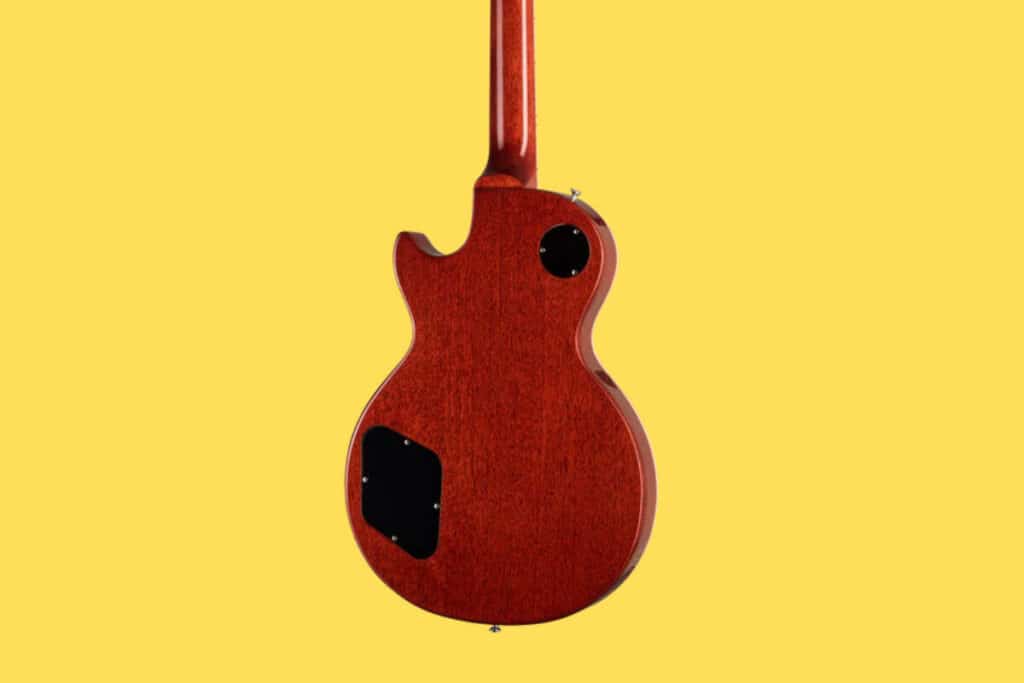
This is a heavy guitar, often pushing 9-10 lbs. Portability is handled excellently by the included Gibson USA Hardshell Case, which offers serious, robust protection for travel.
You will notice the weight on your shoulder during a three-hour rehearsal, but the sound and sustain are the trade-off.
Pros & Cons
Pros
- Slim Taper Neck: Fast, comfortable, and preferred by lead players.
- Authentic Build: No weight relief, nitro finish, and solid Mahogany body.
- Killer Tone: Burstbucker 61s deliver hot, articulate, classic rock voices.
- Included Hardshell Case: Top-tier protection for a top-tier guitar.
Cons
- Weight: It’s a literal heavyweight; expect shoulder fatigue during long gigs.
- Price: A significant financial investment, placing it out of range for many.
- Potential Feedback: Un-potted pickups can squeal at extreme stage volumes.
Who Should Avoid It: The Lightweights and Modders
Avoid this guitar if your budget is tight, if you have back/shoulder issues and require a weight-relieved model (look at the Les Paul Modern instead), or if you plan to immediately swap out the hardware or electronics.
Also, if you need modern coil-splitting and phase switches, look toward the more versatile, slightly cheaper Les Paul Classic or something from Epiphone (we love its Gibson Inspired Les Paul)
