


Should You Buy The Gibson SG Standard ’61? I Like It A LOT; Here’s Why I Recommend It…
The Gibson SG Standard ’61 is a fundamental rock machine that redefined speed and tone when it replaced the Les Paul in 1961. For many, it’s the true sound of the 1960s.
From The Doors to the Beatles, all the greats loved the SG for its focussed clarity, lightweight nature, and easy to play neck.
Here are 15 Reasons the SG Standard ’61 remains one of the greatest guitars ever made, and why I’d use one of these over a Gibson Les Paul any day of the week (and twice on a Sunday).
Why Everybody Loves A Gibson SG Standard
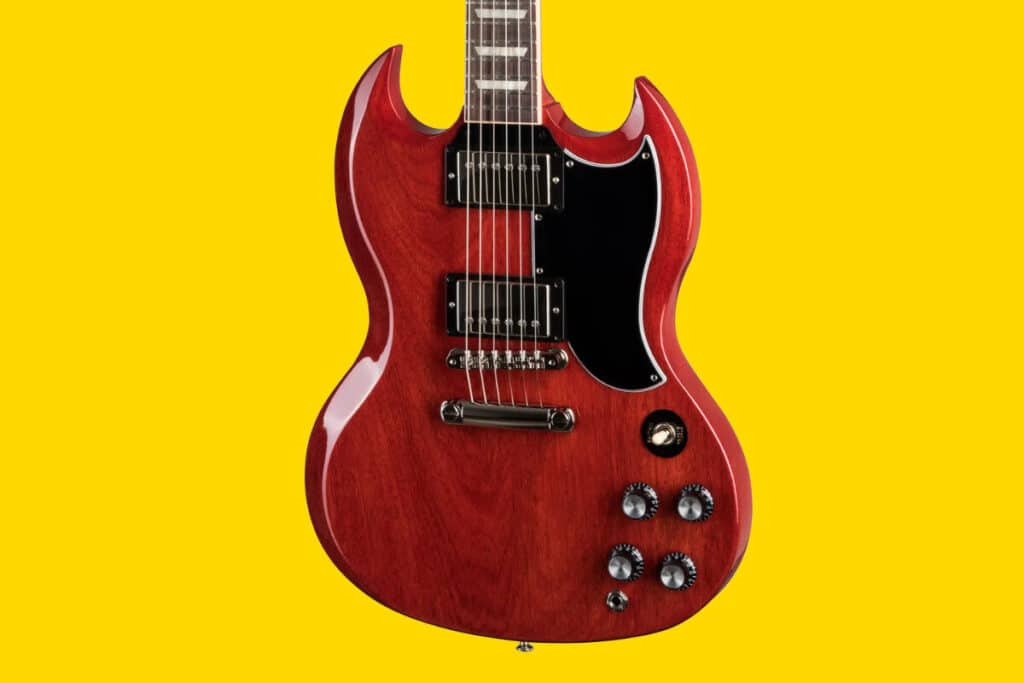
The Build & Feel (Reasons 1-5)
- Featherweight Construction: The thin, solid Mahogany body makes the SG incredibly light, typically clocking in well under 7 lbs. This is the ultimate touring guitar—no more back pain from a heavy Les Paul!
- The Slim Taper Neck Profile: It features the ’60s-spec Slim Taper neck, which is significantly thinner and faster than the ’50s profile. This neck is built for lead playing and speed.
- Unbeatable Upper Fret Access: The deep double-cutaway horns grant completely unimpeded access to all 22 frets, making the top of the neck just as playable as the bottom.
- Nitrocellulose Finish: The guitar wears a hand-sprayed gloss nitrocellulose lacquer finish. This thin coating maximizes resonance and allows the wood to “breathe” and age authentically, developing that classic vintage look over time.
- Iconic Body Design: The legendary double-horned shape is instantly recognizable and perfectly ergonomic for playing both standing up and sitting down.
The Tone & Electronics (Reasons 6-10)
- Hot Alnico V Pickups: It utilizes ’61 R (Rhythm) and ’61 T (Treble) Burstbuckers loaded with Alnico V magnets. These magnets provide higher output and a sharper attack compared to mellower ’50s PAFs.
- Aggressive Midrange Bark: The combination of the thin Mahogany body and the Alnico V pickups gives the SG a signature, cutting, aggressive midrange bark that effortlessly slices through a dense band mix.
- Musical Volume Taper: The electronics feature hand-soldered CTS 500k audio taper pots. This ensures that when you roll the volume down, the tone cleans up gradually and musically, letting you control the dirt level purely from the guitar.
- Orange Drop Capacitors: The inclusion of these premium capacitors means that when you roll the tone knob down, the sound remains musical and usable, not just muddy—critical for achieving creamy, dark lead tones.
- Excellent Sustain: Despite its lightweight, the solid Mahogany construction and the ABR-1 Tune-O-Matic bridge bolted directly into the body ensure the guitar delivers fantastic sustain for big power chords and singing lead lines.
The Vintage Authenticity & Versatility (Reasons 11-15)
- The “Les Paul SG” Heritage: The guitar carries serious historical significance: it was originally branded the Les Paul SG Standard (1961-1963), officially taking over from the original Les Paul body.
- Vintage Deluxe Tuners: It features Kluson Deluxe tuners with green Keystone buttons, providing a classic look and reliable tuning stability.
- Period-Correct Hardware Options: You can choose your hardware destiny: the highly stable Stop Tailpiece, the authentic Sideways Vibrola (“wiggle stick,” as it originally shipped in ’61), or the popular Maestro Vibrola (the ’63/’64 George Harrison spec).
- Classic Cherry Finish: The guitar is finished in the iconic vintage cherry finish, which allows the beautiful Mahogany grain to show through, instantly invoking the look of the ’60s era.
- Gig-Ready Protection: Every SG Standard ’61 ships with a deluxe Gibson Hardshell Case, guaranteeing it is protected and road-ready straight out of the dealer’s door.
Sold? You bloody well should be. This reissue is a brilliant guitar; it plays beautifully, thanks to its slim neck and the pickups run super-hot. It is expensive (not insane money but the kind that’ll make you pause and think about your spouse).
But, then again, it is a Gibson. This is the way Gibson does things. And this thing will hold its value nicely too, likely appreciating if you hold onto it for long enough.
For long-time players and lovers of 1960s-soaked rock and roll, however, I reckon it serves up plenty of bang for your buck.
And if you’d like to know what I thought when I played one, check out my Gibson SG Standard ’61 review for the full picture.
