


Baritone guitars don’t just go low, they go huge. If you’ve ever tried to drop your standard guitar into B or A tuning and ended up with a floppy mess, then you already know why baritones exist.
I started using baritones to get tighter low tunings, but they ended up becoming a secret weapon for everything from heavy riffs to ambient scoring and even acoustic tracks.
So what’s the deal with baritones, and why do I keep reaching for them?
Are Baritone Guitars Worth It? Yes – Here’s Why I Love Them (And You Might Too)
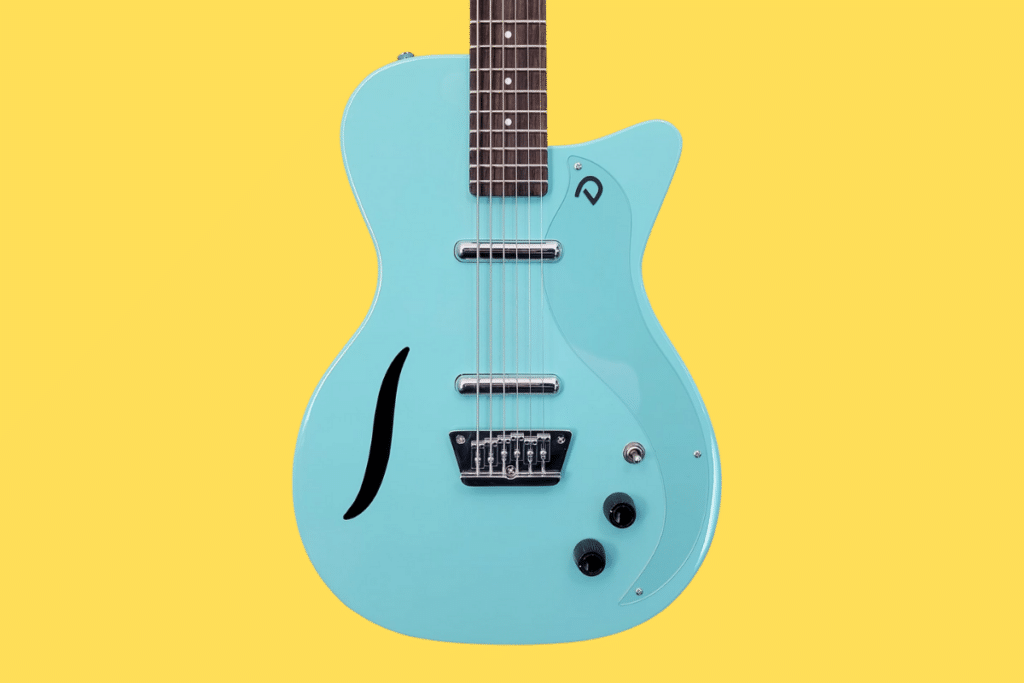
Lower Tunings That Actually Work
Let’s be real: tuning a 25.5″ scale Strat down to B standard is like trying to race a minivan in the Indy 500. The strings go limp, your intonation’s trash, and everything turns to mud.
Baritone guitars usually have a scale length between 26.5″ and 30.5″, which keeps the string tension tight even at lower tunings like:
- B standard (B–E–A–D–F♯–B)
- A standard (A–D–G–C–E–A)
- Drop A or even lower
This is why players like Devin Townsend and Stephen Carpenter rely on 27–28″ baritone necks. They need that tuning stability for massive, complex riffs that still sound sharp and defined.
Tone That Lives in Its Own Space
Baritones don’t just sound lower—they sound different. They sit between a regular guitar and a bass, and that’s where the magic is. They’ve got:
- Full, thick low mids
- Clear note separation, even with distortion
- Enough articulation to stay “guitary” without getting muddy
It’s the kind of tone that just fills the mix without fighting the bass or the kick drum. In a studio session, a baritone rhythm track can glue the whole low-end together.
Bands like Architects and Machine Head use baritones to carve out their crushing low-end, but it’s not just a metal thing—Mark Lettieri and Dave Matthews have used baritones to add depth and texture in funk, jazz, and acoustic settings too.
Creative Fuel for Writing
Sometimes just changing your tuning is enough to break out of a songwriting rut.
With a baritone, I can use familiar chord shapes but get a totally different vibe. Suddenly a G chord becomes an E♭.
Everything sounds darker and moodier, and that opens up a whole new world of ideas.
- Need to write for a lower vocal register? Baritone.
- Want cowboy chords to sound like thunder? Baritone.
- Playing solo and need to fill more space? You guessed it: baritone.
It’s like playing the same instrument… but not.
Studio & Live Advantages
I’ve recorded plenty of sessions where the producer’s first reaction to a baritone track was, “Whoa, what is that?” The clarity and weight just jump out of the speakers.
This is why most good studios worth their salt keep one or two baritones hanging around. They’re there because they deliver:
- Rock-solid intonation in low tunings
- Thicker, richer tone that doesn’t need layering
- More frequency range, especially in minimal arrangements
On stage and in live situations, they give you tuning stability where standard guitars just can’t hang. No floppy strings, no guesswork. Just clean, heavy tone that sounds right.
Two Killer Baritone Guitars I Use In My Day-To-Day For Practice, Recording & Demoing
There’s a baritone out there for every style, whether you’re writing doom riffs or dreamy indie jams.
Here are two I’ve personally used and recommend for totally different reasons:
Gretsch G5260T Electromatic Jet Baritone with Bigsby
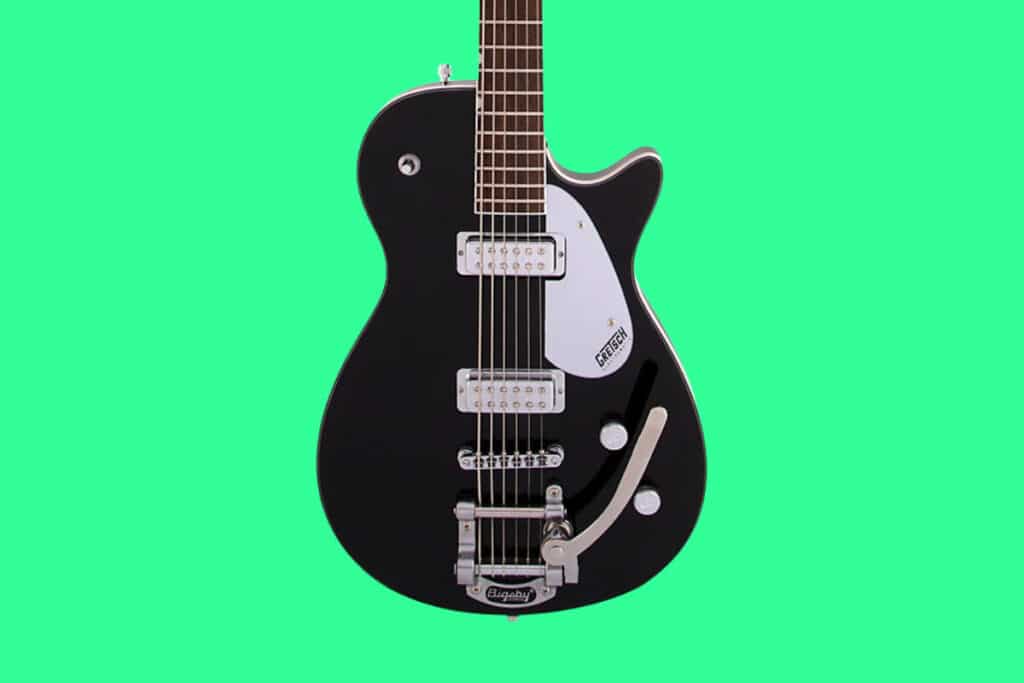
This thing is dripping with retro character. It’s got a 29.75″ scale length, so you can easily go to A standard without the tone getting mushy. Add in the Bigsby trem, and you’ve got surf, spaghetti western, and shoegaze sounds right at your fingertips. I love it for ambient textures and layered overdubs where I want depth but not necessarily distortion.
Why I dig it:
- Super clean, chimey tones with lots of sustain
- That Bigsby gives you subtle vibrato without wrecking tuning
- Looks sharp as hell, no shame in that
If you’re into atmospheric stuff or want a baritone that stands out sonically and visually, this is your move.
Squier Classic Vibe Baritone Custom Telecaster
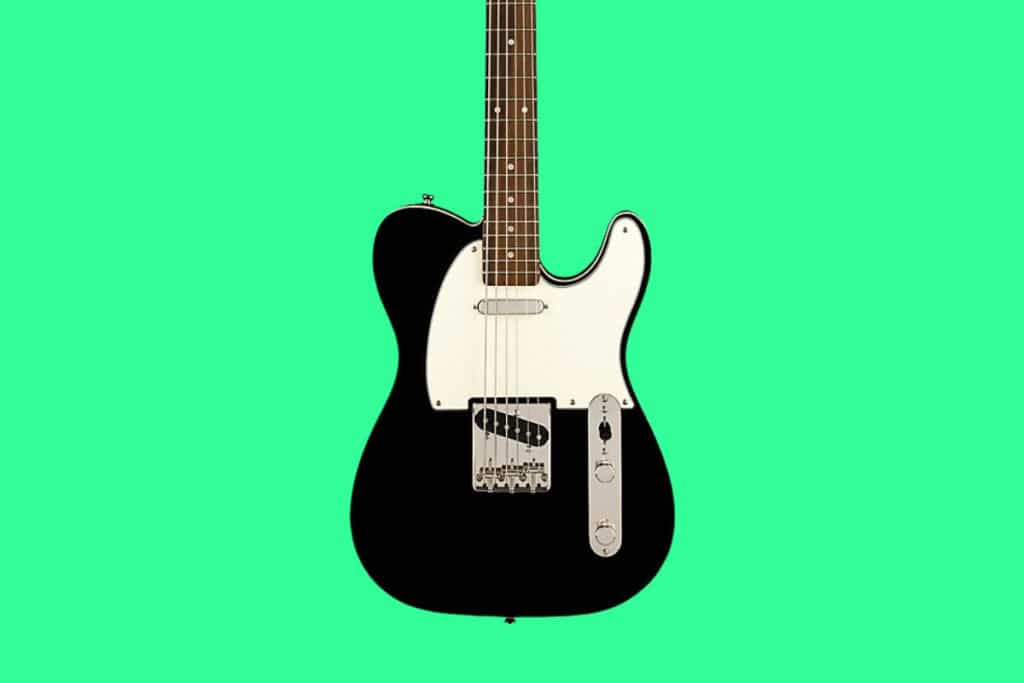
Now we’re talking heavy duty. This one has a 27″ scale, tuned to B standard out of the box. It’s a workhorse for rock, punk, stoner metal, you name it. The Tele-style body makes it familiar, and the Classic Vibe pickups are surprisingly versatile. I’ve used this one in sessions for heavy rhythm parts and it just sits in the mix.
Why it slaps:
- Stable B tuning with tight string response
- Punchy, direct tone—great with pedals or straight in
- Doesn’t break the bank, and it punches way above its price
If you’re looking for your first baritone or need one that can take a beating and stay in tune, this is a no-brainer.
Some Legends Who Love Baritones

Don’t just take my word for it. Here are some heavy hitters who rely on baritone guitars:
- Devin Townsend – Uses baritone 7-strings for his open-C madness
- Stephen Carpenter (Deftones) – Tuning down to A and beyond on baritone 7s and 8s
- Robb Flynn (Machine Head) – Drop B riffs on his Epiphone Baritone Flying V
- Robert Smith (The Cure) – Octave-down clean tones with the Schecter UltraCure VI
- Billy Gibbons (ZZ Top) – Uses custom baritones for swampy, bluesy low-end
Bottom Line / Why Baritone Guitars Are Worth It For Most Guitarists

Baritone guitars aren’t just for metal. They’re great for metal, of course, but the applications of their tonal qualities and lower turnings can be used in everything from surfer rock to dark country and even things like indie music and pop music.
For dudes that like to sing, they’re great for lowering the overall vibe of a song which makes singing easier too. If you have a naturally deep voice and you struggle to get up to higher notes in Standard Tuning, a baritone guitar is a must-have.
They’re for anyone who wants to expand their tonal range without losing playability. Whether you’re after low-end chug, rich solo textures, or just want a guitar that sounds bigger, a baritone is well worth adding to your collection.
I couldn’t live without mine. I don’t play them and use them all the time but for certain songs or moods or riffs, I always reach for them. Once you hear and feel what they can do, you’ll start gravitating towards them more and more.
