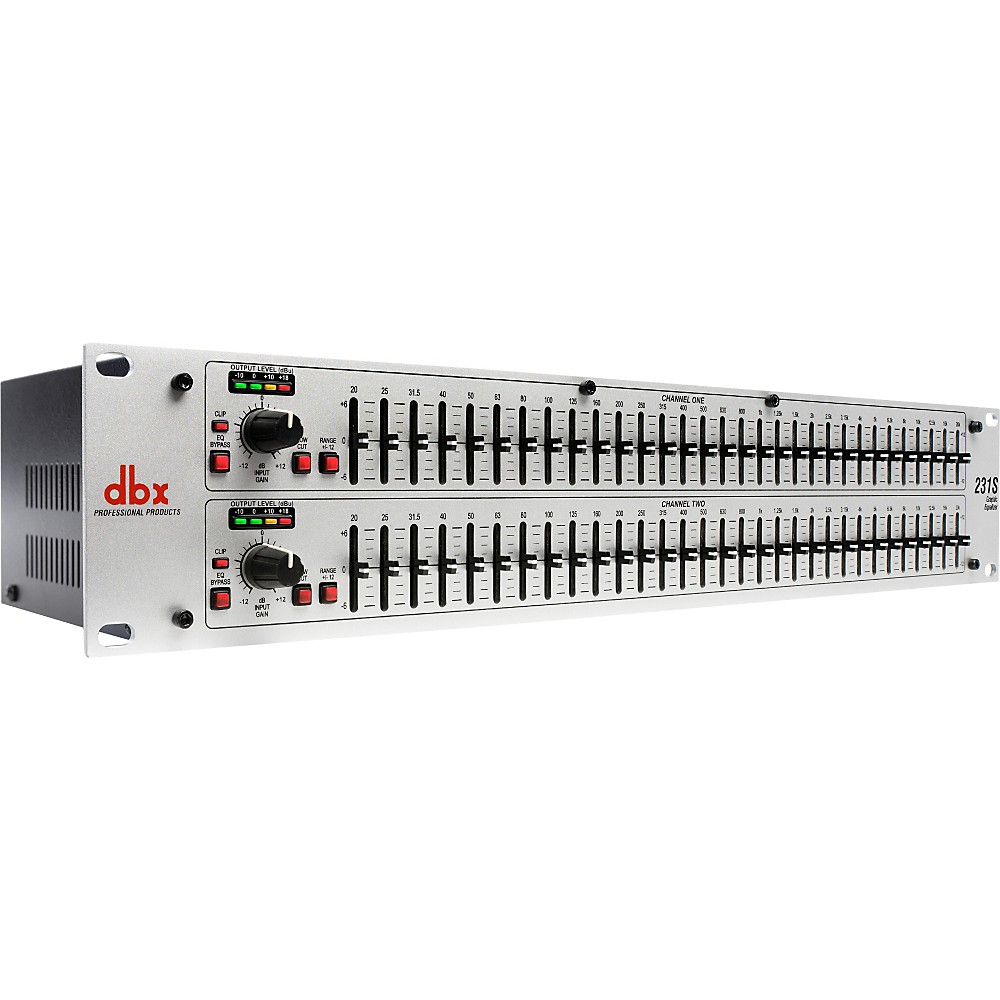
dbx 231s Dual-Channel 31-Band Graphic Equalizer
A professional-grade dual-channel EQ with 31 bands per channel, legendary dbx build quality, and precision control. Industry standard for sound engineers and players who demand surgical tone shaping.
Critics
Pros & Cons
Pros
- +31 bands per channel provide 1/3-octave resolution — professional-level precision without compromise
- +Dual-channel configuration enables independent EQ for mains and monitors, or two instrument chains
- +Balanced XLR connections with over 108dB dynamic range ensure studio-quality signal integrity
- +Built like a tank with analog faders and proven reliability in touring rigs worldwide
Cons
- −Steep learning curve if you're unfamiliar with graphic EQ workflows and frequency mapping
- −Requires rack mounting or careful cable management — not a plug-and-play solution
- −Premium price reflects pro-level specs, but entry-level users might feel overkill
The Verdict
The dbx 231s is the sound engineer’s workhorse and the tone-sculpting obsessive’s dream. This isn’t a hi-fi toy — it’s the real deal, used in touring rigs and installed PA systems because it works and keeps working. 31 bands per channel means you have surgical control over every frequency range. Need to kill a 3kHz honk? Boost vocals in the 2.5kHz band? Tighten bass response at 60Hz? You’ve got the tools.
Build quality is where dbx’s reputation is earned. Heavy-duty faders, balanced I/O, and engineering that prioritizes reliability. Over 108dB of dynamic range means your signal stays clean and transparent whether you’re working with hot bass output or quiet acoustic signals. The dual-channel setup makes this uniquely flexible — run your guitar into one channel, bass into another, and EQ each independently. Or use both channels for stereo processing.
This is a professional tool. If you’re a live sound engineer, recording at home, or a player obsessed with tone control, it’s worth the investment. For bedroom practice and casual gigging, you’re probably overkill-budget.