


ElectrikJam’s Recommendation…
The Fender Player II Stratocaster offers the best value-to-performance ratio in Fender’s entire lineup right now. At around $799, you’re getting a guitar that sounds like a Strat, feels like a Strat, and records like a Strat without needing to spend over two grand.
Choose the Fender Player II Stratocaster if…
- Budget is a Factor: You want 90% of the Strat experience for less than half the price of the Ultra II.
- You Value Traditional Tone: You want authentic Alnico V chime and don’t mind the traditional single-coil hum.
- You Need a Workhorse: You need a guitar that feels great (thanks to the rolled edges) and is reliable for constant gigging or home use.
Choose the Fender American Ultra II Stratocaster if…
- You Need the Fastest Neck: The Modern “D” neck and 10″-14″ compound radius are essential for your playing style (shredding, fusion, high-level technical lead work).
- Recording is Key: You cannot tolerate 60-cycle hum—the Ultra Noiseless pickups solve this problem completely.
- Money is No Object: You want Fender’s most advanced, most comfortable, and most feature-packed instrument built for ultimate performance and ergonomic luxury.
The Workhorse vs. The Flagship
| Feature | Fender Player II Stratocaster | Fender American Ultra II Stratocaster |
|---|---|---|
| Origin & Price | 🇲🇽 Mexico (Mid-Price) | 🇺🇸 USA (Flagship/Premium) |
| Aimed At | Gigging Musicians, Enthusiasts, Pro Budget | Pro Studio Players, Technical Guitarists |
| Neck Profile | Modern “C” | Modern “D” (Thinner, Wider Shoulders) |
| Fingerboard Radius | Fixed 9.5″ Radius | 10″ to 14″ Compound Radius |
| Pickups | Player Series Alnico V (Classic Sound, Standard Hum) | Ultra II Noiseless (Hum-Free, Expanded Tones) |
| Ergonomics | Rolled Fingerboard Edges | Sculpted Body Contours, Tapered Heel |
| Key Hardware | ClassicGear Tuners | Deluxe Locking Tuners & Cold-Rolled Steel Tremolo Block |
Let’s be honest: on paper, both the Player II Stratocaster and the American Ultra II Stratocaster look like modern, giggable Strats. But once you actually sit down with them, it becomes obvious they’re built for completely different types of players — and different budgets.
The Player II: Classic Formula, Upgraded Feel
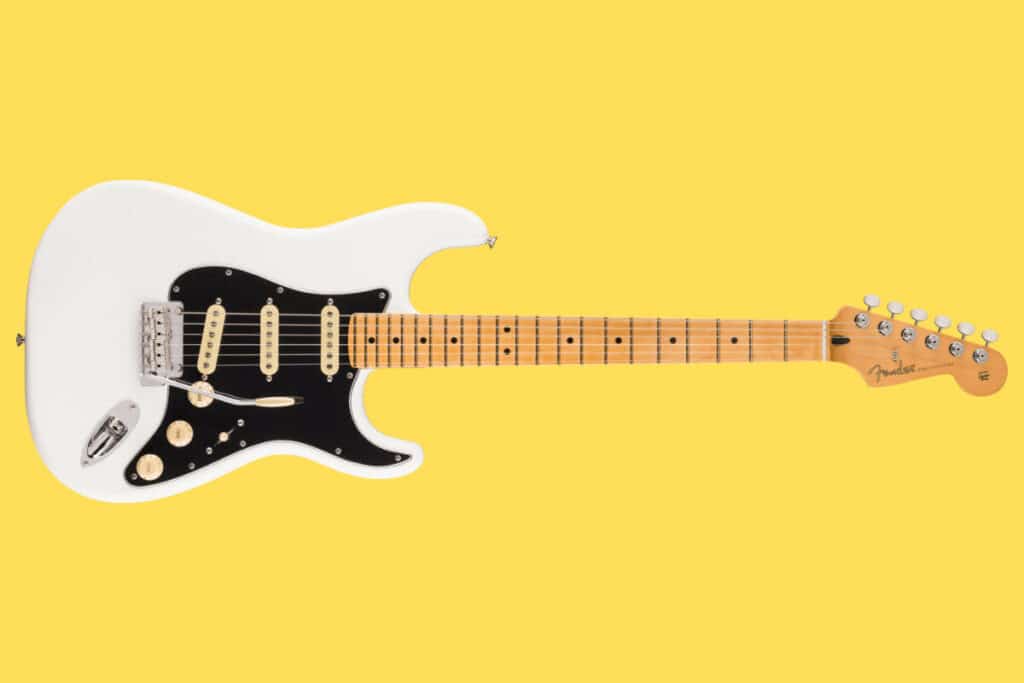
The Player II Strat is Fender’s updated take on its bestselling MIM (Made in Mexico) line — and it’s still aimed squarely at working guitarists who want something reliable, affordable, and familiar.
It keeps the traditional Strat formula alive with vintage-style pickups, a 9.5” radius neck, and a control layout that’s been around since the ‘50s. But now it feels better in the hands thanks to a neck with rolled edges — something you used to only get on more expensive models. The hardware is dependable, the tones are pure Strat, and the vibe is very much “plug in and play.”
If you’re a gigging player who wants classic sounds without babying a $2K instrument, this is where your money goes the furthest. It’s also a great next step if you’re upgrading from a Squier or a beginner-level guitar.
The Ultra II: Modern Engine in a Familiar Shell
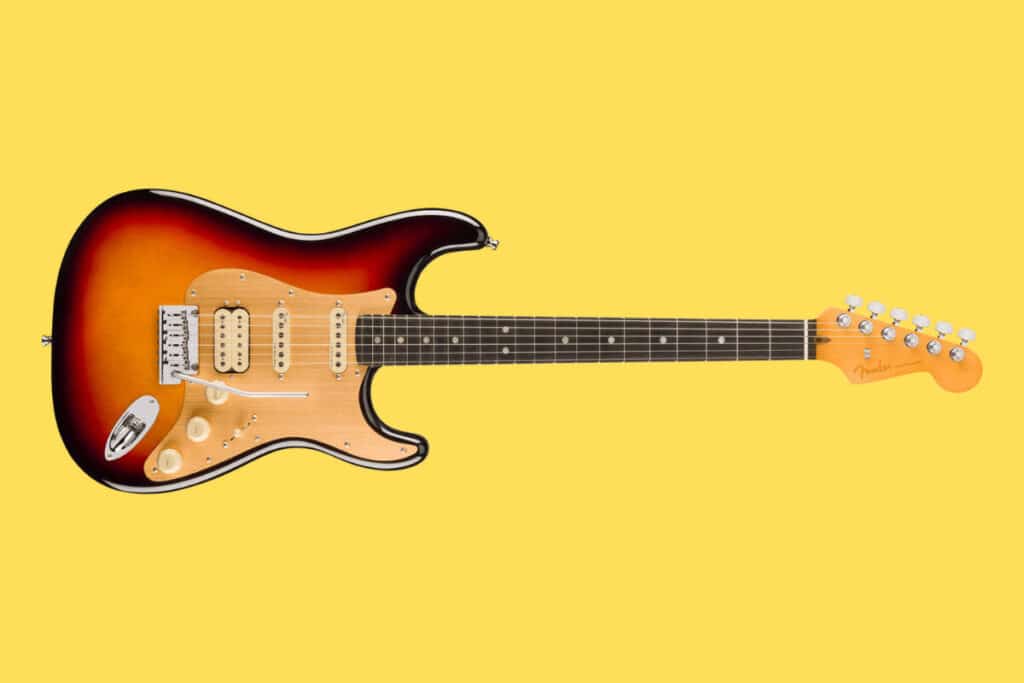
The American Ultra II, on the other hand, is what happens when Fender tries to push the Strat as far forward as it can go without turning it into something unrecognizable.
This one’s for players who want refinement at every touchpoint. The neck is slimmer, faster, and has a compound radius that flattens out as you move up the fretboard, a subtle shift that makes soloing in higher registers way easier.
The heel is sculpted for access, the pickups are noiseless, and the S-1 switching adds tones you won’t get from a standard 5-way.
You’re paying more, but you’re getting a Strat that’s been tuned for comfort, silence, and speed — perfect for studio work, pro-level touring, or players who need a tool that gets out of the way and lets them perform.
So, Who’s Each Guitar Really For?
If you’re chasing that authentic Strat feel, love the snap and sparkle of vintage-style pickups, and want a guitar that’s easy to replace or modify down the line, the Player II is your best bet. It’s straightforward, fun, and forgiving which is exactly what a Strat should be for most working musicians.
But if you’re someone who plays every day, records often, and wants flawless tuning stability, modern ergonomics, and total tonal control, the Ultra II is going to make your life easier.
You’re either buying a workhorse that earns its keep gig after gig… or a flagship that’s been engineered to stay out of your way while you do your best playing. That’s the real difference.
Ergonomics and Playability: Comfort vs. Speed
| Component | Player II (Comfort Focus) | Ultra II (Speed Focus) |
|---|---|---|
| Neck Profile | Modern “C”. Familiar, medium thickness, universally comfortable. | Modern “D”. Thinner front-to-back with wider shoulders. Designed for high-speed technical playability. |
| Fingerboard Radius | Fixed 9.5″. Great for rhythm and chords, traditional feel. | 10″ to 14″ Compound. More curved for chords lower down, flattens out higher up for effortless bending without fret-choke. |
| Upper Fret Access | Standard Strat neck plate and heel. | Sculpted Tapered Neck Heel. Dramatically improved access to the 17th fret and beyond. |
| Feel Verdict | The Player II feels like a high-quality, broken-in classic. The Ultra II feels like a high-performance, custom-modded racing machine. | The Ultra II Strat is basically the Boss Level Strat, the one made for pros. Everything is custom built for speed, tone, and playability. |
Choosing between these two necks is a big deal because it’ll affect how you play, and where your hands live on the fretboard.
The Player II sticks with Fender’s familiar Modern “C” profile: the kind of neck that feels instantly comfortable if you grew up on Strats or play a lot of first-position chords.
It’s not flashy, but it’s honest. Paired with the 9.5” radius and newly rolled edges, it gives you that broken-in, “been playing this for years” feeling straight out of the box.
For blues, rhythm work, and classic rock bends around the 12th fret, it’s perfect. You’re not fighting the guitar, you’re just playing it.

The Ultra II, though, is a different beast. Its Modern “D” neck is flatter and fuller, with a compound radius that starts at 10” and flattens to 14” by the time you reach the upper frets.
What does that mean in real terms? Solos feel smoother. Fast runs are cleaner. Big bends don’t choke out. If you’re into fusion, modern rock, or anything that requires speed and accuracy above the 12th fret, this neck works with you, not against you.
Yes, it costs more but the Ultra II neck is engineered to make technical playing feel easier, especially if you’re pushing into advanced territory.
So really, it comes down to this:
- The Player II neck feels like an old friend — warm, familiar, and reliable.
- The Ultra II neck feels like a precision instrument — fast, clean, and designed to keep up with demanding technique.
Either way, you’re getting a quality neck. But only one of them is built to disappear under your hands when the tempo picks up and the notes start flying.
Pickups and Tone: Classic Warmth vs. Hum-Free Clarity
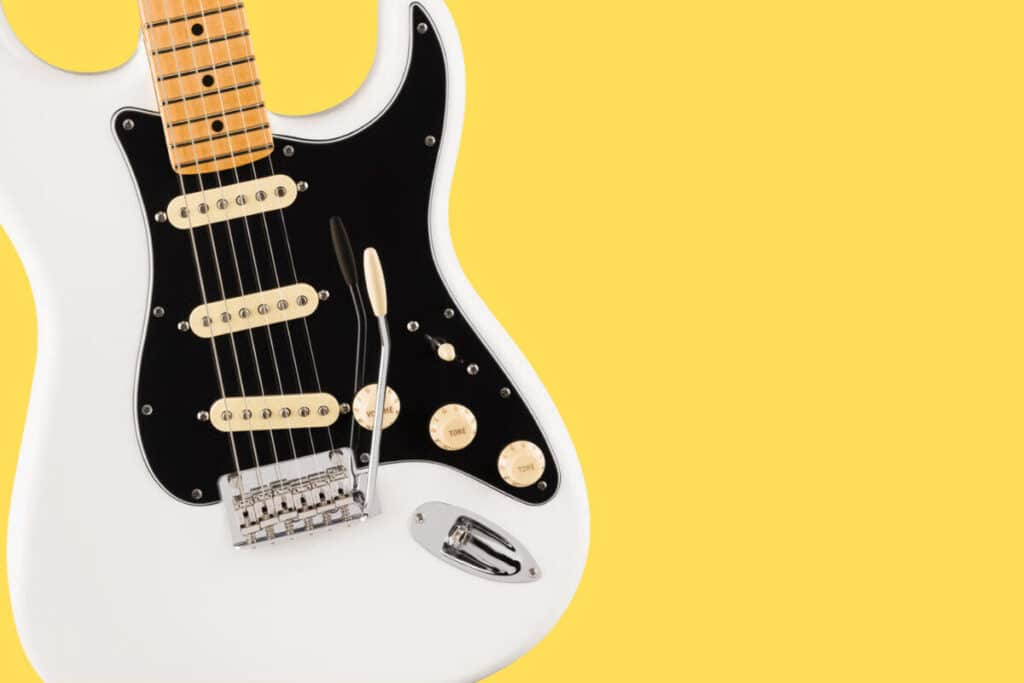
The tonal difference between the Player II and the Ultra II is immediately noticeable. It all centers around one key factor: noise.
Player II: Classic Strat Sound, Hum Included
The Player II is loaded with Alnico V single-coil pickups. These are slightly hotter than vintage-style pickups, but they still deliver the signature Stratocaster tone that glassy top-end, warm mids, and the signature “quack” in positions two and four. It is a dynamic and expressive sound that responds well to picking nuance and volume changes.
However, it comes with the traditional drawback of single-coils: 60-cycle hum. If you’re playing clean or with light overdrive, it’s manageable. But the moment you push into higher gain or start layering tracks in a studio setting, the hum becomes much harder to ignore.
For many players, that noise is part of the Strat character. It sounds raw and alive. But in a modern recording or live environment, it can be a liability.
Ultra II: Clean, Clear, and Quiet
The Ultra II uses Fender’s latest Ultra Noiseless pickups. These are designed to retain the clarity and sparkle of single-coils while eliminating the background hum entirely. They handle overdrive and distortion with far more control, and the lack of noise is a serious advantage for recording or complex live rigs.
This model also features the S-1 switch hidden in the volume knob. That adds additional tonal options, including series and parallel pickup configurations. In simple terms, it allows you to get thicker, punchier tones that go well beyond what the standard 5-way switch offers.
You still get that familiar Strat character, but with a modern twist. The tones are a bit more hi-fi, slightly cleaner on the attack, and more consistent in demanding setups.
Which One Wins?
If you are chasing that unmistakable, slightly imperfect Stratocaster tone that comes with a bit of hum and grit, the Player II is the more honest and straightforward choice.
If you play with higher gain, record frequently, or need a wider tonal palette with minimal noise, the Ultra II gives you serious advantages that the Player II simply cannot match.
Hardware and Construction: Reliability vs. Refinement

Both the Player II and Ultra II are reliable guitars that can handle regular gigs, rehearsals, and studio work.
But the Ultra II brings in a handful of high-end refinements that start to matter the more time you spend with your instrument.
Tuning Stability and Feel
The Player II uses Fender’s ClassicGear tuners, which do a solid job of holding tune and make fine adjustments easy. For most players, especially those sticking to moderate tremolo use, they’re more than enough.
The Ultra II takes things further with Deluxe Locking Tuners, which are faster to restring and provide extra tuning stability, especially if you use the tremolo aggressively. On many models, they also come in a short-post version, which helps with string break angle over the nut and adds even more stability.
Tremolo Differences You Can Feel
Both models feature a 2-point synchronized tremolo, but they’re not built the same. The Ultra II uses a Cold Rolled Steel block, which adds mass and slightly improves sustain and tone transfer. It also comes with a pop-in tremolo arm that feels smoother and more secure during play.
The Player II’s trem is dependable and performs well, but it doesn’t quite have the same response or tone as the one on the Ultra II. For subtle vibrato and light bends, you’ll probably never notice. But if you lean into your trem use or rely on it for expressive phrasing, the Ultra’s setup feels more refined.
Nut Materials and Performance
Here’s another small detail that affects tuning in a big way. The Ultra II uses a Graph Tech TUSQ nut, which is known for consistent tone and excellent tuning stability when using the trem. It also reduces friction across the strings.
The Player II uses a synthetic bone nut. It does the job and sounds good, but under repeated tremolo use, it’s more prone to string binding or tuning drift.
Stage-Ready Details
One more difference that shows how the Ultra II is built with pro players in mind: Luminlay side dots. These glow-in-the-dark fret markers make a real difference on dark stages, especially during long sets or outdoor gigs at night.
The Ultra II also tends to feature more involved finishes. We’re talking about multi-stage metallics, fades, and deeper gloss coatings that look richer under stage lights. The Player II colors are fresh and fun, but the Ultra II lineup clearly targets players who want something a bit more premium.
Wrapping Up: Which Strat Should You Actually Buy?
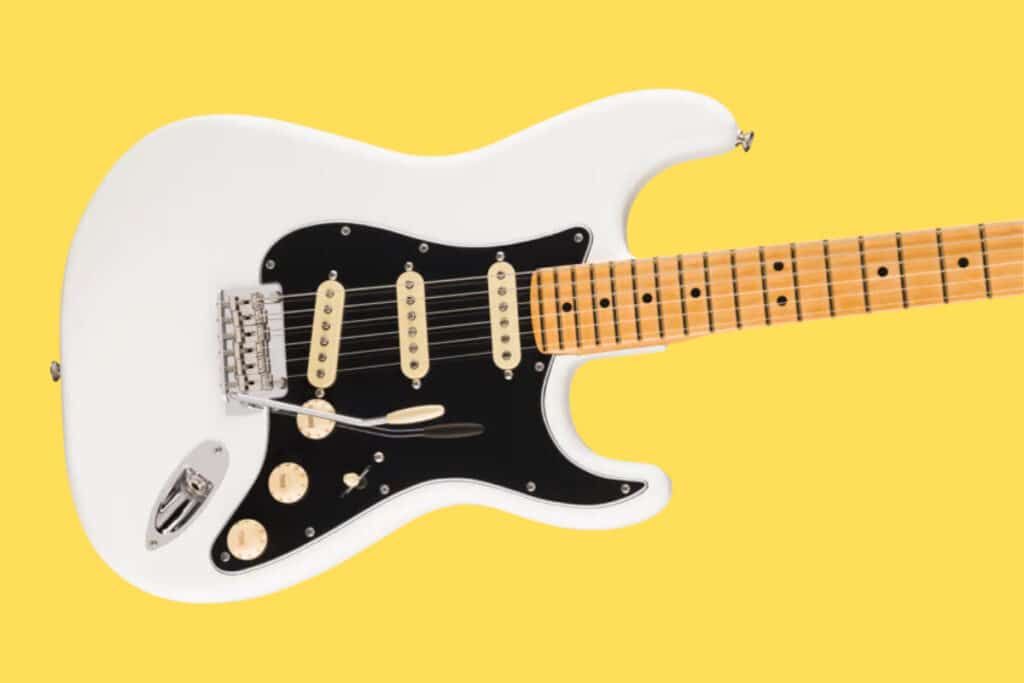
While both the Player II and the Ultra II are fantastic guitars, the Player II Stratocaster is the one we recommend for 98% of players.
Why? Because it nails exactly what a Stratocaster is supposed to be. It delivers the sound, the feel, and the vibe that made the Strat iconic in the first place — and it does it at a price that makes sense.
You’re getting a professional-level instrument that’s absolutely ready for studio sessions, live gigs, and home recording. The Alnico V pickups are warm, dynamic, and authentic. The rolled neck edges give it that broken-in feel. And the build quality coming out of Fender’s Mexican factory is rock solid, especially with the updates in the Player II series.
What really makes it stand out is how much value it offers. You’re getting 90% of what you’d get from a much more expensive American Strat — sometimes even better depending on your preferences — and you’re paying less than half the price. You can use it stock, or mod it over time as your needs evolve. Either way, it’s going to keep up.
On the other hand, the Ultra II is a high-performance machine built for a very specific kind of player. If you record in ultra-quiet environments, play with tons of gain, or need lightning-fast fret access and modern switching, it’s a fantastic tool. But unless those things are make-or-break for you, the Player II will cover all the same ground with a little more character and a lot less stress on your wallet.
The Verdict

The Player II Stratocaster offers the best value-to-performance ratio in Fender’s entire lineup right now. At around $799, you’re getting a guitar that sounds like a Strat, feels like a Strat, and records like a Strat without needing to spend over two grand.
The new rolled-edge neck makes a huge difference in feel. It plays smoother than the original Player Series and easily holds its own against some American models. The Alnico V pickups sound open and dynamic.
Yes, there’s some hum, but they sound right especially for blues, indie, rock, funk, and anything vintage-inspired. That’s not just opinion, either — these are the same pickup types people have recorded hit records with for decades.
The tuning stability is solid, the trem works as it should, and the finishing quality out of the Ensenada plant is seriously impressive these days. It feels like a guitar that could cost $1,200 or more, and many players wouldn’t know the difference. In a blind A/B test, it would absolutely surprise people, especially if you record with real amps or quality amp sims.
It’s the kind of guitar you’ll keep coming back to, even if you own more expensive ones. Because sometimes, the right tool isn’t the flashiest it’s just the one that works every time you plug it in.
